
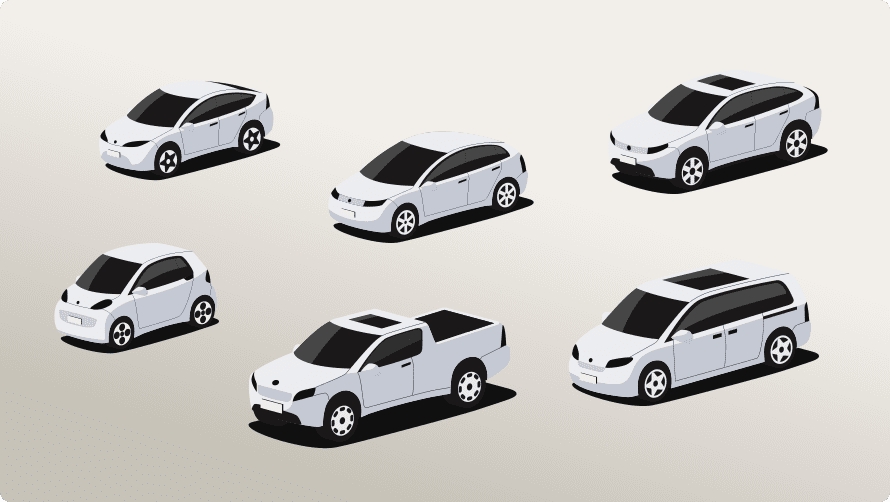
New data from a comprehensive review of National Highway Traffic Safety Administration (NHTSA) crash records reveals that larger passenger vehicles such as SUVs and pickup trucks tend to have lower fatality shares for their own occupants in two-vehicle crashes, but these same vehicles often impose disproportionate risk on occupants of smaller or lighter vehicles involved in the same crashes.
Key Insights
Analysis of over 30,000 fatal two-vehicle crashes from 2019–2023 shows large SUVs and light pickups have the lowest average occupant fatality shares, at about 20% and 27% respectively, compared with much higher shares in smaller vehicles such as convertibles and hatchbacks.
-
In crashes between large SUVs and hatchbacks, hatchback occupants experienced fatality shares often exceeding 50%, while large SUV occupant fatality shares remained below 15%.
-
The one crash pairing where large SUV occupants had higher fatality shares involved light pickups, with 53% of large SUV occupants fatally injured versus 36% for pickups.
-
Model-level analysis found vehicles like the Jeep Grand Cherokee had some of the lowest occupant fatality shares (23%), while smaller models such as the Chevrolet Cavalier had the highest (88%).
-
Overall, the data supports broader research indicating that vehicle mass and front-end geometry influence crash incompatibility, amplifying danger to occupants of lighter vehicles in collisions with heavier vehicles.
Transportation safety analysts note the so-called “crash incompatibility” phenomenon stems from physics and vehicle design. Research indicates that when a vehicle is substantially heavier, it transfers more force to a lighter partner in a collision, increasing fatality risk on the lighter side. This pattern is consistent with independent findings showing that a 1,000-pound mass differential can increase fatality risk by 40–50 percent for occupants of lighter vehicles.
Why This Matters
The findings come amid a sustained trend in the United States toward larger vehicles, where SUVs and trucks make up a majority of new sales and everyday transportation choices. While these vehicles may offer micro-level safety benefits for their occupants, the macro-level effects include a growing disparity in crash outcomes based on vehicle size, with broader implications for traffic safety policy, vehicle design standards, and public health. This dynamic also intersects with the wider phenomenon of increasing average vehicle size - sometimes described as “autobesity” or a driver safety arms race - which has been linked to higher pedestrian and cyclist fatality risks in other research.
Methodology
This analysis draws on NHTSA fatal crash data covering 2019 through 2023 and examines occupant fatality shares in two-vehicle crashes by vehicle body type and model. The study assessed more than 30,000 fatal collisions involving passenger vehicles in the United States, calculating the proportion of fatalities occurring among occupants of each vehicle relative to those in the vehicle it struck. View the report here: https://www.meyers-flowers.com/data-shows-large-vehicles-protect-their-own-occupants-but-may-endanger-others/
About Meyers & Flowers
Meyers & Flowers is a Chicago-based law firm specializing in personal injury and wrongful death litigation, with experience handling cases involving motor vehicle collisions, product liability, and other serious injuries. The firm regularly analyzes public safety data to inform clients and the broader public on trends that affect roadway safety and legal accountability.
Media Contact
Company Name: Meyers & Flowers
Email: Send Email
Phone: +16305769696
Address:225 W Wacker Dr #1515
City: Chicago
State: IL 60606
Country: United States
Website: https://www.meyers-flowers.com